Every novel starts with one main idea. As someone learning how to write a novel as a beginner, do not wait for a perfect, huge idea. Good stories often come from simple “what if” thoughts or real-life moments you change a little.
Try this easy way: Sit for 10-15 minutes and write anything that comes to mind — no stopping, no judging. Questions like “What if a normal student discovered a secret power?” or “What if two old friends met again after many years?” can spark something big. Look at your own life too — a funny family event, a sad memory, a dream you had — these make strong starting points because they feel real.
Read books you love in the same style you want to write (mystery, romance, adventure). Notice what pulls you in. But always make your story your own. Beginners often get stuck chasing the “best” idea, but the best one is the one that excites you enough to keep writing.
Quick exercise: Write down 5 things you enjoy (music, travel, animals, food, rainy weather). Mix them — maybe a character who solves crimes using old songs during storms. Ideas are hiding everywhere.
Alt text: Colorful mind map showing how to write a novel as a beginner with idea branches and notes.

How to Overcome Writing Anxiety and Support Mental Health | BetterHelp
Writing a novel takes time, usually months or even a year for beginners. But breaking it into steps makes it less overwhelming. We’ll cover everything you need, so you can write down notes or even use this for reference like exam prep – detailed and straightforward.
Step 1 : Finding Your Story Idea – The First Move in How to Write a Novel as a Beginner
Okay, first things first: you need an idea. This is the spark that starts everything. As a beginner, you might think great ideas just pop up like magic, but actually, they come from everyday life. Look around you. What if you took a real event from your past and twisted it into something fictional? Or think about “what if” questions. Like, what if a regular person found a hidden treasure in their backyard? That’s how many stories begin.
To brainstorm, grab a notebook or open a document on your computer. Write down anything that comes to mind – no judging yet. This is called freewriting. Set a timer for 10 minutes and just let the words flow. You might surprise yourself with cool ideas. Another tip: read books in the genre you like. If you love mysteries, read some and note what excites you. But don’t copy – use them for inspiration.
Once you have a few ideas, pick one that excites you the most. Ask yourself: Why do I want to tell this story? Is there something personal in it? Maybe it’s about friendship, loss, adventure, or love. Your “why” will keep you motivated when things get tough. For beginners, start with something simple. Don’t try a huge epic with 20 characters right away. Maybe a story about one person’s journey.
Here’s a quick exercise: List 5 things you love (like coffee, rainy days, old movies). Then, connect them to a character or plot. For example, a character who solves mysteries while running a coffee shop on rainy days. See? Ideas are everywhere.
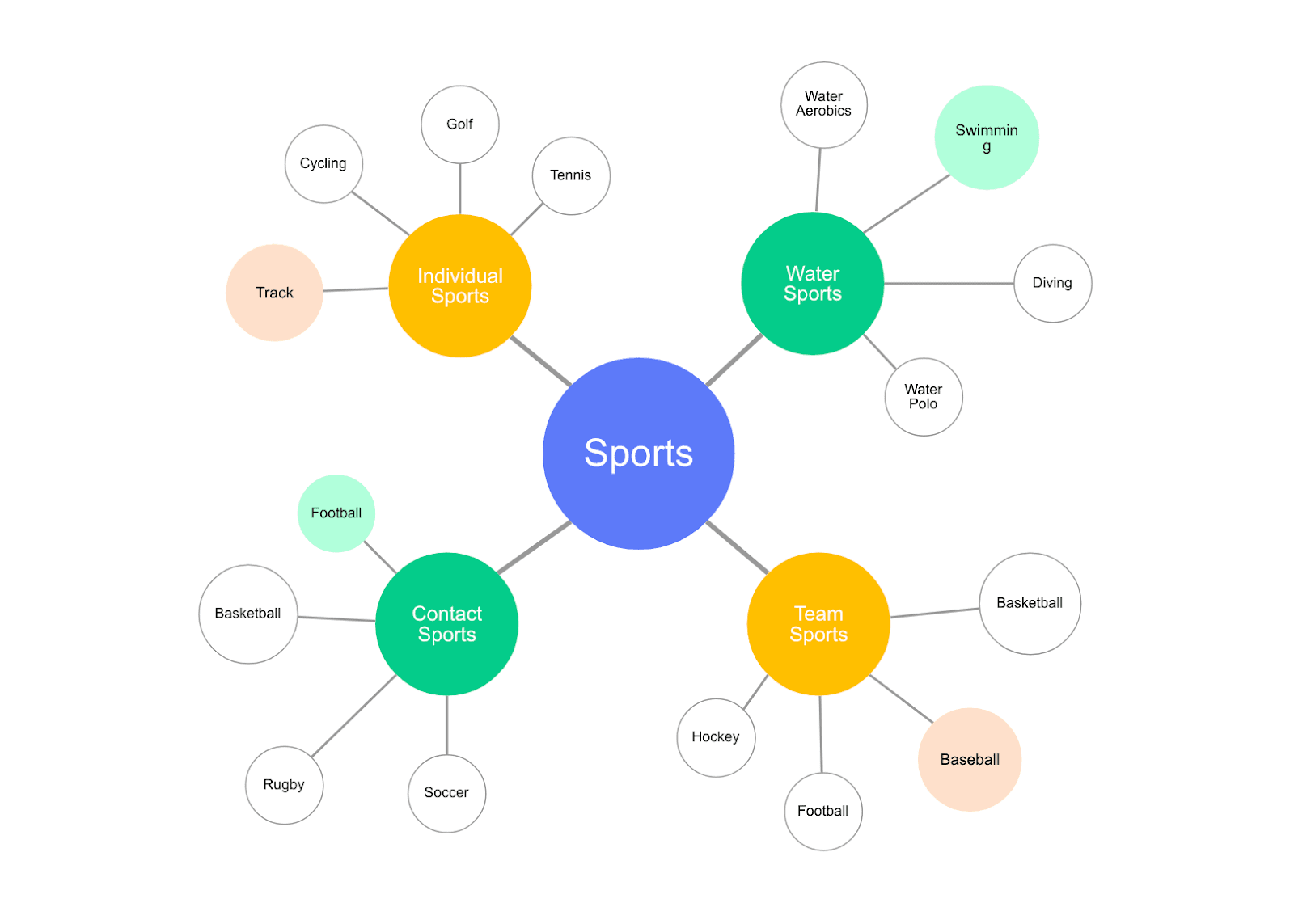
Visualize your brainstorming like this mind map.
How to make a mind map: 5 easy steps | Nulab
Remember, your idea doesn’t have to be perfect now. It will change as you write. The goal is to have something to build on. Many beginners get stuck here because they wait for the “perfect” idea. Don’t do that – just pick one and go. You’ll refine it later.
Step 2: Planning and Outlining – Your Roadmap for Writing Your First Novel as a Beginner
Once you pick an idea, make a simple plan. This step stops you from getting lost halfway. Beginners who skip planning often quit because the story feels messy. A basic outline acts like a map.
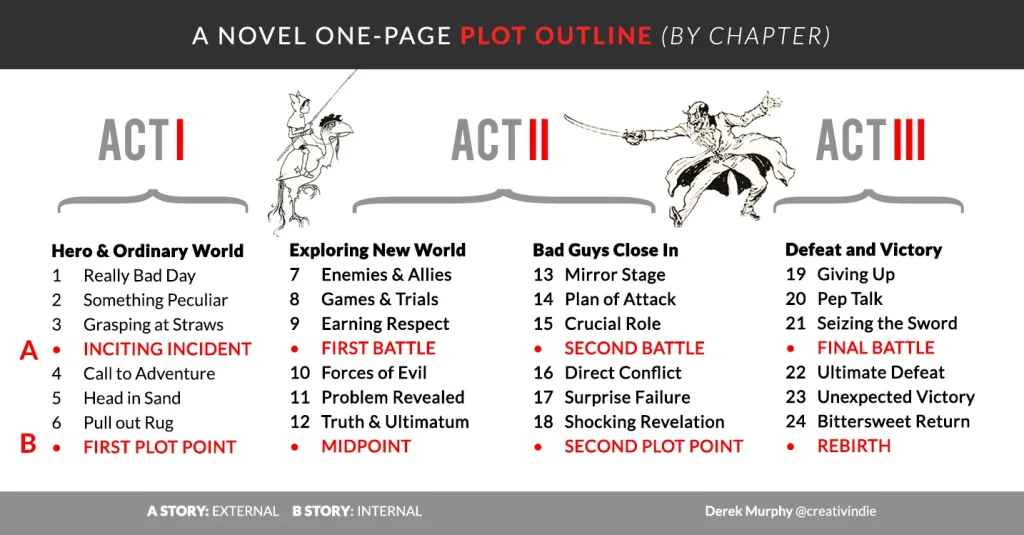
Use the easy three-act structure many writers love:
- Act 1: Show the normal world and introduce the big problem.
- Act 2: Make problems bigger with challenges and growth.
- Act 3: Reach the exciting peak moment, then solve everything.
First write a one-page summary of your whole story. Then break it into 10-20 chapters and note 2-3 main things that happen in each. You can change it later — plans are not fixed rules.
Decide small things too: Will you write in first person (“I did this”) or third person (“She walked away”)? Past tense or present? For most beginners starting how to write a novel as a beginner, third-person past is easiest.
Free fiction writer’s template and story structure to help plot your novel (24 chapter outline template for word, scrivener, G-Docs, plottr) – Creativindie
Planning also includes deciding on genre, point of view (first person like “I” or third like “he/she”), and tense (past or present). For beginners, third person past tense is easy. Research your genre too – what do readers expect? Like, romances need a happy ending.
This step might take a week or two, but it’s worth it. A good outline keeps you on track and makes writing faster. If your idea changes, update the outline. Flexibility is key.
Step 3: Developing Characters – Make People Readers Care About
Characters are the heart of your novel. Readers care about people, not just plots. So, make them feel real. Start with your main character – the protagonist. Who are they? What’s their name, age, job? More importantly, what do they want? What scares them? What’s their flaw?
Create a character sheet for each main one. Include background, looks, personality, and how they change over the story. For example, a shy kid who becomes brave. Give them quirks – like always chewing gum when nervous. This makes them unique.
Don’t forget side characters and the villain. They need depth too. The bad guy shouldn’t be evil just because – give them a reason.
To develop them, ask questions: What would they do in a crisis? How do they talk? Practice writing scenes from their view.
Here’s a worksheet to help.

Character Development Worksheet | Teaching Resources
As a beginner, focus on 3-5 main characters. Too many can confuse you. Remember, characters drive the plot. Their choices create the story.
Step 4: Building the Plot – Keep Readers Turning Pages
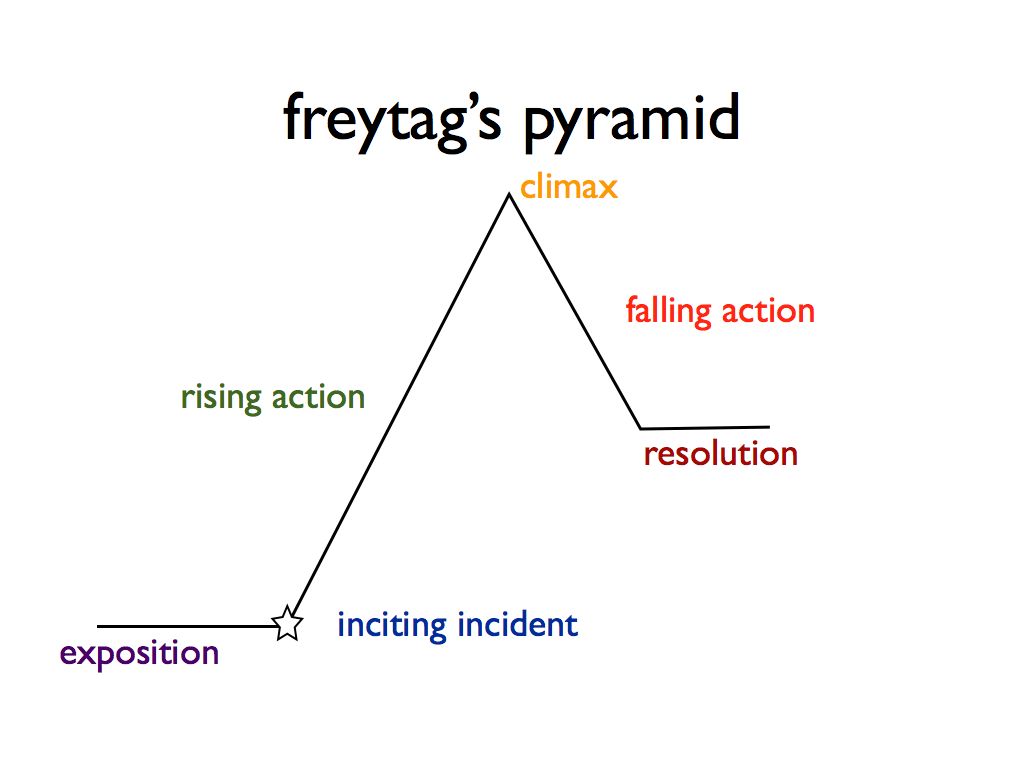
Plot is what happens in your story. It’s the sequence of events. Use your outline to flesh it out. A good plot has rising action, where things get harder for the hero, leading to a climax, then falling action and resolution.
Follow Freytag’s pyramid: Exposition introduces the world, inciting incident starts the conflict, rising action builds tension, climax is the big moment, falling action wraps up loose ends, denouement is the end.
Add twists to keep it exciting. But make sure events make sense – cause and effect.
See this diagram.
Pacing is important. Mix fast action with slower moments for character growth. End chapters on cliffhangers to keep readers turning pages.
Step 5: Writing the First Draft – Just Get Words Down
This is where the fun begins – actually writing! Set a schedule, like 500 words a day. Find a quiet spot and just write. Don’t edit yet – that’s for later. The first draft is about getting words down.
If you get stuck, skip ahead or freewrite. Tools like timers help – write for 25 minutes straight (Pomodoro technique).
Imagine yourself typing away.

Aim for 50,000-80,000 words for a novel. It might take months, but consistency wins.
Step 6: Editing and Revising
Done with the draft? Celebrate, then edit. First, take a break – a week or two. Then read through and note big issues like plot holes.
Revise for structure, then characters, then language. Use tools like Grammarly for grammar.
Look at this editing example.

Red Ink and Correction Marks – Purdue University Global Academic Success Center
Do multiple rounds. Cut what’s not needed – “kill your darlings.”
Step 7: Getting Feedback
Share with beta readers or a writing group. Ask for honest thoughts. Use feedback to improve, but don’t change everything.
Join a group like this.

The pros and cons of writers groups — A Story to Tell.
Step 8: Publishing Your Novel
Decide: traditional or self-publishing. For self, use Amazon KDP. Get a cover designed.
Examples of covers.
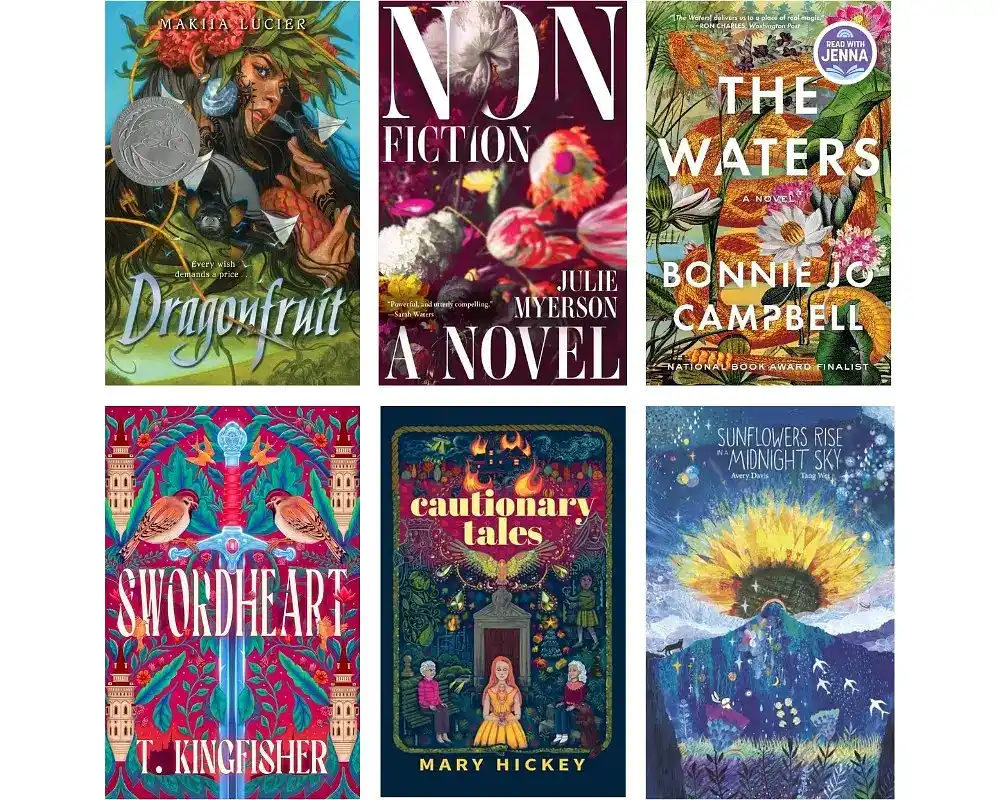
50+ Eye-Catching Book Cover Ideas to Get You Inspired
For traditional, query agents. Market with social media.
Inspire yourself with these books.

11 Best Books to Gift Writers and Aspiring Authors | Vanity Fair
Conclusion
You’ve got this! Learning how to write a novel as a beginner isn’t about being perfect — it’s about starting, staying consistent, and improving step by step. Every great author was once where you are now. Focus on your idea, build your characters, follow your outline, and keep writing even on the hard days. The journey of how to write a novel as a beginner teaches you discipline, creativity, and confidence. Take it one chapter at a time, and before you know it, you’ll be holding your finished book.